
Arrest Warrants in Shelby County
Under Iowa Code section 804.1, a criminal case in Shelby County can begin when a complaint is filed with a magistrate. If the complaint and its affidavits show probable cause, the magistrate may issue an arrest warrant. A citation can sometimes take its place. The warrant itself tells a peace officer to bring the named person into custody. Probable cause is a factual threshold, not a finding about what the person did. Read Shelby County arrest warrant records together with the court docket, later returns, release entries, and disposition. A sheriff's public presentation is not the signed instrument and never replaces the court file.
Shelby Probable-Cause Warrant Path
The warrant path runs through clear stages in Shelby County. A complaint and affidavits come first. Then comes probable-cause review, issuance by a magistrate, delivery to a peace officer, service, the officer's return, and prompt appearance before a magistrate. Each stage can leave its own court entry, and the current Iowa Code chapter 804 governs the whole process. A served citation is a promise to appear, not an arrest warrant. But willful failure to appear as directed can become a separate simple misdemeanor and prompt the court to issue a warrant. That later order is distinct from the probable-cause warrant that opened the original case.
Process: Complaint → Probable cause → Arrest warrant → Peace-officer service → Initial appearance.
What a Shelby Arrest Warrant Contains
Iowa law fixes the core parts of an actual warrant. Public reports can carry broader fields. Age, physical descriptions, and report labels may help the holding agency identify a record, yet they are not part of the judicial command. Compare both before relying on either.
| Direction | Addressed to any peace officer in Iowa |
|---|---|
| Identity | Defendant's name if known, or “name unknown” |
| Offense | Name or general description of the alleged offense |
| Issuance | Date and county or city where issued |
| Authority | Magistrate signature and name of office |
| Release | Bail sum or other conditions when the offense is bailable |
A Shelby County docket may also hold the case number, charge, return, bond entry, and disposition.
Shelby Warrant List Versus Instrument
The Shelby County Sheriff's active-list page shows people with possible active warrants held by that office. The sheriff warns that the data shifts as arrests happen, offers no accuracy guarantee, and says only authorized law enforcement can confirm entries. The office also gives no warrant information by phone. The embedded report can display issue date, name fields, age, height, weight, gender, race, and listed charges. It is not a statewide index, and it is not the signed warrant. A name missing from it does not prove no warrant exists. Treat a displayed row as a lead, match it to the right person and case, and seek official confirmation before acting.
How Shelby Arrest Warrants Are Served
Iowa Code section 804.4 lets an arrest warrant be delivered to any peace officer and served anywhere in Iowa. A Shelby County arrest warrant does not stop at Harlan or the county line. Section 804.6 reserves warrant arrests to peace officers, so no member of the public should confront or detain someone seen in an online report. The Shelby County Sheriff's Office serves as the county peace agency and provides contract law enforcement to eleven incorporated cities, and other Iowa officers may also serve a qualifying warrant. Remember that the agency holding a warrant for service need not be the issuing authority. The clerk answers questions about the judicial record, while enforcement and safe-surrender logistics call for current instructions from the proper agency and counsel. The sheriff's official office page lays out the local law-enforcement route.
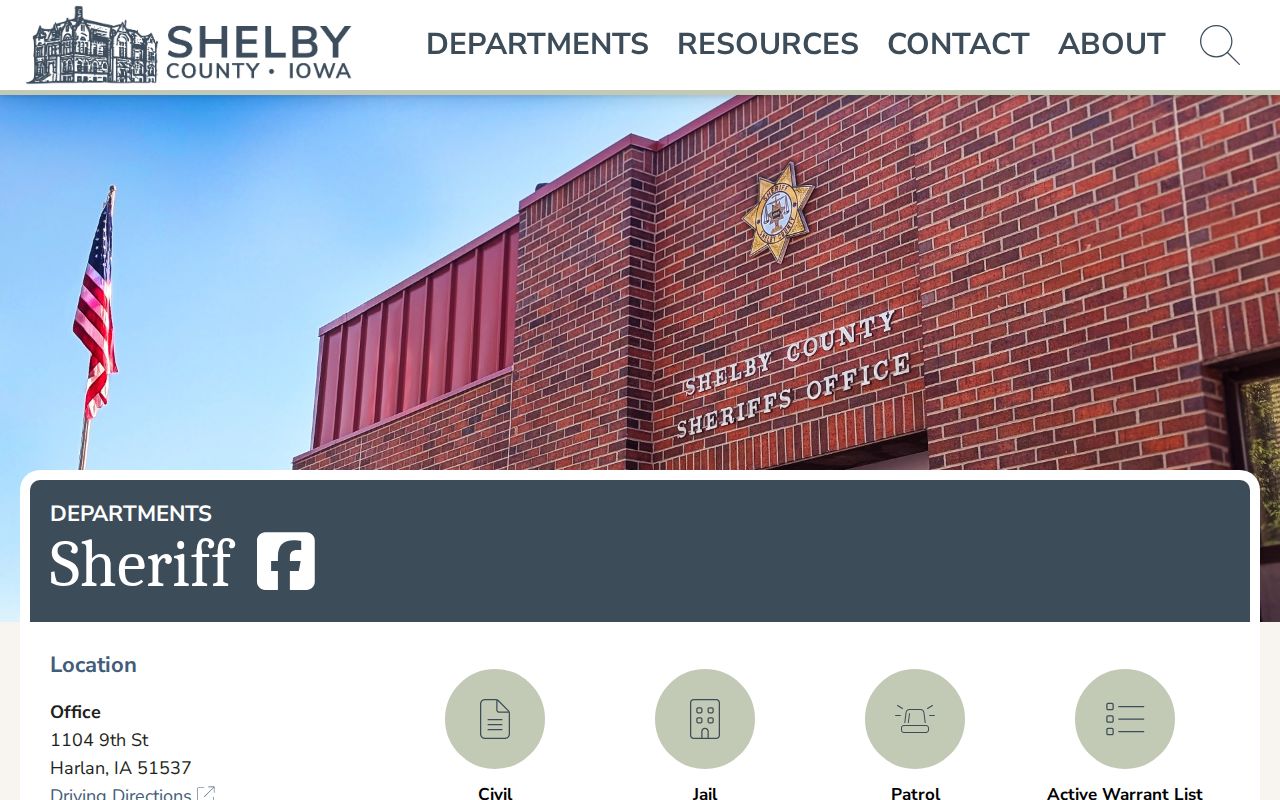
That Shelby County contact helps route agency questions, though the posted rule bars warrant disclosure by phone.
Shelby Warrant Service Statewide
Leaving Shelby County does not cancel an Iowa warrant. Authorized agencies trade wanted-person data through the Iowa On-line Warrants and Articles network, which the Iowa Department of Public Safety describes as a criminal-justice tool rather than a public portal. Public users rely on the Shelby sheriff presentation, Iowa Courts Online, and the Shelby County Clerk of Court. Each answers a different question. The report can flag possible sheriff-held warrants, the docket can reveal case events, and the clerk can route record requests. None lets the public query the agency-only statewide network.
Shelby Arrest, Summons, and Bench Warrants
The form of process shapes what happened and what must happen next. A summons commands a court appearance without authorizing immediate custody the same way. A bench warrant usually flows from an unmet duty inside an existing case. An arrest warrant rests on probable cause and directs a peace officer to arrest.
| Process | Starting point | Immediate effect |
|---|---|---|
| Arrest warrant | Probable-cause complaint | Authorizes peace-officer arrest |
| Summons or citation | Charge with command to appear | Requires appearance |
| Bench warrant | Missed date or court duty | Authorizes custody for court |
The docket controls the label in Shelby County. Never assume a "capias" result follows the same procedure as every arrest warrant.
Shelby Initial Appearance and Bail
Iowa Code section 804.21 sets the first stop after a warrant arrest. The arrested person goes before the nearest or most accessible magistrate without unnecessary delay. In qualifying cases, pretrial guidelines or the uniform bond schedule can apply before court is even in session. That early framework does not bind anyone. Once the judicial officer sees the person, discretion takes over, and the schedule need not be copied. The official bond schedule page lists the statewide classifications and the exceptions, including forcible felonies and other named offenses. Shelby County posts no public bond window. No accepted-payment rule is public either. So confirm the case, amount, terms, and recipient with court or jail staff before relying on the schedule. It shows its own limits.
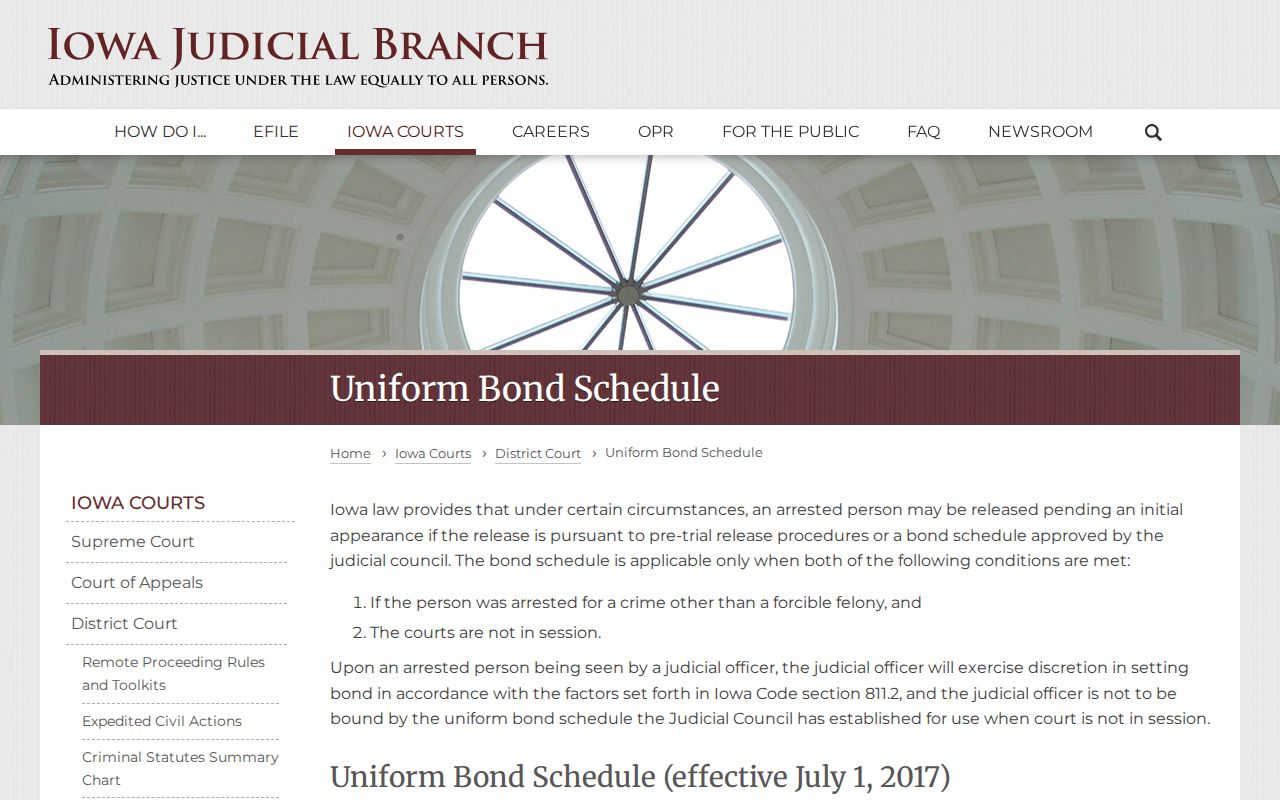
The posted schedule still guarantees nothing in Shelby County, neither release nor a set amount in any individual case.
Resolve a Shelby Arrest Warrant
Start with the case, not an unsolicited caller. Pin down the county, case number, charge, issue date, and warrant entry. The Shelby County Clerk of Court, at 612 Court Street in Harlan, lists 712-217-6737 and CountyClerk.Shelby@iowacourts.gov for court-record routing. The sheriff works from 1104 9th Street. Its public warrant page bars telephone warrant disclosure.
- Locate the public case and verify that the identity and docket match.
- Ask the clerk about record and appearance mechanics, without seeking legal advice from staff.
- Consult counsel about a court appearance, bond, motion, or planned surrender.
- Confirm custody logistics through the proper official channel before going in.
- Keep the written release conditions, next date, and filed disposition.
Act carefully: Do not evade, confront an officer, or send money to an unsolicited caller; arrange a lawful response through the court, counsel, and official agency contacts.
Shelby Court Return Completes the Record
The officer's return is not a public report status. At the initial appearance in Shelby County, the warrant and the return both reach the magistrate. The docket can then record release, bail, later hearings, or disposition. Keep written proof. A web list may lag behind a court change. The Shelby County Clerk of Court directory lists the office that maintains the local court file. A courthouse public terminal may provide documents that free online access does not. Sealed, juvenile, and restricted investigative records stay off limits. A records request should state the Shelby County case number, record type, and date range when known. Iowa Judicial Branch policy allows verbal and written requests. A complex search may need a written description. Copying, postage, staff time, redaction review, and data work may all be charged. Shelby County posts no standard arrest warrant copy fee, so ask for a current estimate rather than assume a price. A search warrant is a different tool. Iowa Code chapter 808 authorizes a search or seizure of a person, place, thing, or property, based on sworn facts and a specific description. That label alone never authorizes an arrest. Some application material can stay sensitive. So do not lean on a search-warrant return. It is not proof that a person is wanted. For broader steps, the Shelby County warrant records overview routes readers by warrant type and official office.